Choosing campaign measures that match the business goal
Which advertising campaign measures should match my business goal?
Campaign measurement should follow the business and media objectives. Reach, frequency, enquiries, visits and sales answer different questions. Decide which measures are useful before launch, establish their definitions and sources, and use the findings to guide a specific next decision.
Give every measure a clear role
For an awareness objective, reach and repetition can help assess whether the plan delivered the intended exposure. Consideration may need appropriate evidence of interest or understanding, depending on the campaign and available research. Clicks and site visits can be supporting indicators without becoming the main purpose of every channel.
For a response objective, define the event that matters. A relevant enquiry, a booked appointment and a confirmed sale are different outcomes. The automotive lead guide shows how to separate those stages in a practical brief.
Establish definitions and records
Agree the reporting period, the event definition and the source of each measure. State whether a number is observed, estimated or modelled. Define the cost basis if reporting a cost per outcome, and deduplicate responses where the method allows.
Coverage and reporting delays also matter. A measure may describe only a supported audience or a subset of customers. A total can be useful while still requiring a clear explanation of what is included.
Distinguish attribution from incrementality
Attribution assigns credit for an observed response using a reporting rule or model. Incrementality asks whether the campaign created additional outcomes compared with what would have happened otherwise. A report that connects an ad to a response does not by itself answer that second question.
When a claim requires causal impact, plan an appropriate comparison test with the measurement team. Google’s Conversion Lift documentation illustrates a comparison-based approach for eligible campaigns. The suitable design depends on the objective, data access, scale and delivery conditions.
Keep visits and purchases separate
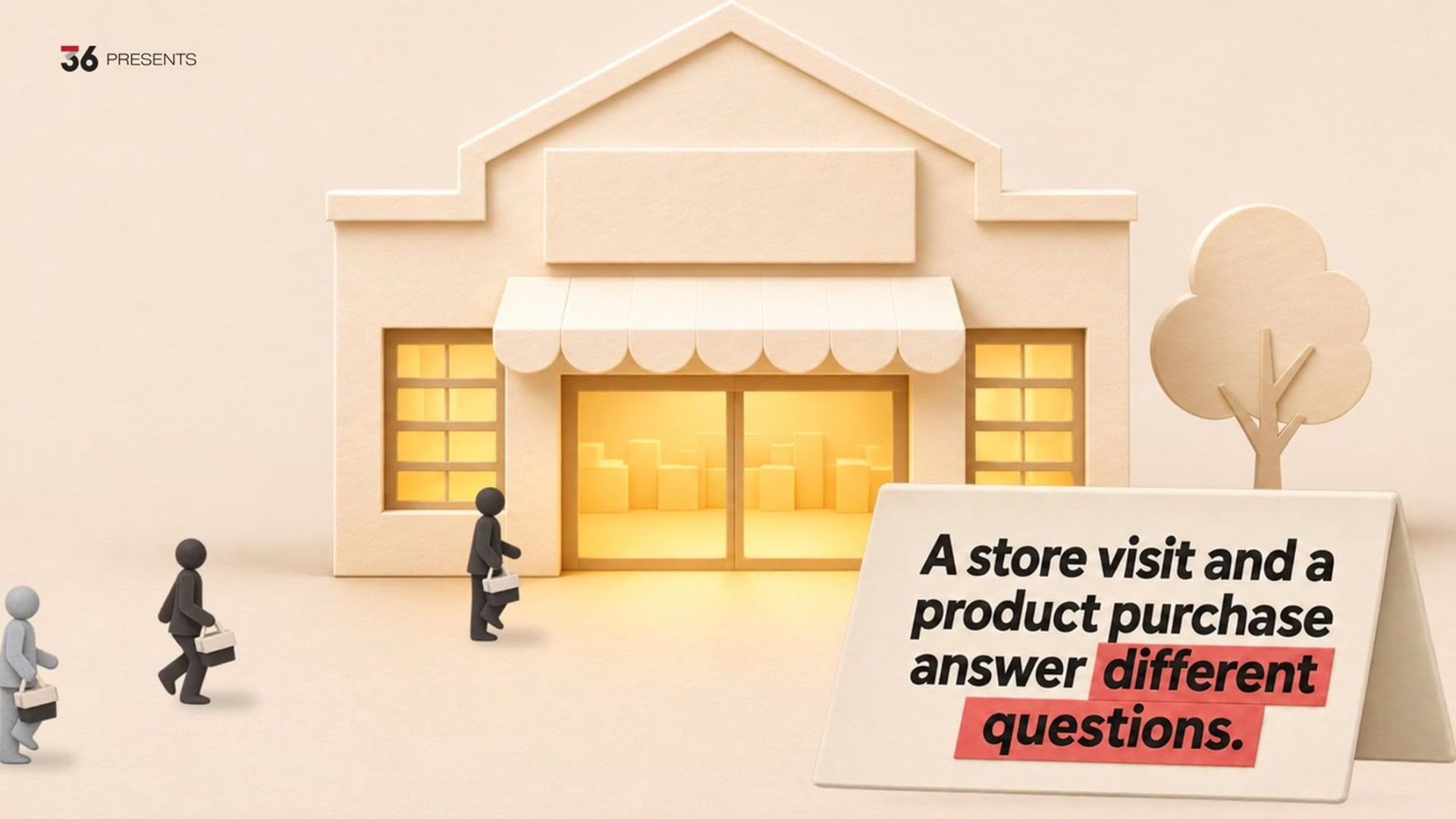
A reported location visit can support one kind of campaign question. Product sales require a different evidence route. The visits and purchases article explains how to avoid turning footfall into an unsupported sales claim, particularly for FMCG products sold through retailers.
Review the decision behind the numbers
Useful reporting should help the team act. If reach is low for an awareness brief, inspect audience scale and delivery. If relevant enquiries do not progress, examine the offer and follow-up. If sales evidence is unavailable, adjust the measurement plan rather than imply a result it cannot show.
Our connected campaign workflow shows how insight, media and reporting can share that decision throughout the campaign.
Are clicks always the best measure?
No. They should be evaluated against the channel’s role and campaign objective. Exposure can be the main job of an awareness channel.
Bring us the business goal. Let’s agree the media role, evidence and review decision before the campaign begins. Talk to 36 Presents
Share: